
Hive Interview

“Retail has changed forever. The winners will be the ones who adapt fastest”: Richard Lim, Chief Executive of Retail Economics
Retail has changed forever.
The winners will be the ones who adapt fastest.
The winners will be the ones who adapt fastest.

Richard Lim
Chief Executive
Chief Executive

Ed Lawson

Consumers are shopping differently than they were just a few years ago. Social commerce, AI, pre-loved marketplaces and changing economic pressures are reshaping how people discover, evaluate and buy products. Ed Lawson, Head of Content at The Retail Hive, caught up with Richard Lim, Chief Executive of Retail Economics, to discuss the forces transforming retail and why agility has become the sector’s most valuable asset.
Ed Lawson: Retail seems to be changing faster than ever. What’s driving that pace of disruption?
Richard Lim: It’s really a combination of factors rather than one single trend.
Consumers are under financial pressure, technology is evolving at an incredible pace and entirely new ways of shopping are emerging all the time. At the same time, retailers are dealing with higher operating costs, global uncertainty and changing customer expectations.
When all those things happen together, disruption stops being an occasional event and simply becomes the environment you’re operating in.
That’s the reality retailers need to plan for.
"Generative AI is already changing how consumers search for information, compare products and make purchasing decisions."
Ed: Customer journeys have become much less predictable. Does that fundamentally change how retailers need to think?
Richard: Completely.
The traditional customer journey used to be relatively linear. You’d create awareness, someone would research a product, visit a store or website and eventually make a purchase.
Today, that journey is fragmented.
Someone might discover a product on TikTok, read reviews on Reddit, ask ChatGPT for recommendations, compare prices on a marketplace and then complete the purchase somewhere completely different.
Retailers have far less control over that journey than they used to.
Instead of trying to force customers down a particular path, businesses need to be present wherever those decisions are being made.
Ed: AI is becoming a huge talking point. How significant do you think it will be?
Richard: I think we’re only scratching the surface.
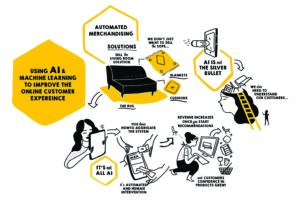
Generative AI is already changing how consumers search for information, compare products and make purchasing decisions. Agentic AI has the potential to take that even further by carrying out parts of the buying journey on behalf of customers.
That’s a profound shift.
Retailers have spent years optimising websites for human visitors. Increasingly they’ll need to think about how their products and content are understood by AI systems as well.
The businesses preparing for that today will have a significant advantage.
Ed: You also talked about the growth of recommerce and pre-loved retail. Is that purely about affordability?
Richard: Price is certainly part of it, particularly given the pressure many households are under, but it’s not the whole story.
Consumers, especially younger consumers, are becoming much more comfortable buying second-hand products.
It’s increasingly viewed as a smart way to shop rather than a compromise.
That creates opportunities for retailers to rethink ownership, resale, repair and circular business models in ways that would have seemed much more niche a decade ago.
Ed: One thing that came through strongly was the importance of community. Why is that becoming so influential?
Richard: Trust.
Consumers are placing more weight on recommendations from creators, online communities and other customers than they are on traditional advertising.
People want authenticity.
They’re looking for real experiences and trusted voices to help them navigate an increasingly crowded marketplace.
That’s changing not only how brands market themselves but how products are discovered in the first place.
Community has become an incredibly powerful driver of commerce.
"The retailers that perform best tend to be the ones with a very clear understanding of who their customers are and which changes genuinely matter to them."
Ed: Retailers are facing so many competing priorities. How do you decide where to focus?
Richard: That’s probably the biggest leadership challenge.
It’s impossible to chase every trend.
The retailers that perform best tend to be the ones with a very clear understanding of who their customers are and which changes genuinely matter to them.
Not every innovation is relevant to every business.
Agility doesn’t mean doing everything. It means being able to recognise the right opportunities and respond quickly when they emerge.
Ed: Are you optimistic about the future of retail?
Richard: Very much so.
Retail has always evolved.
We’ve seen department stores, shopping centres, eCommerce and mobile commerce all fundamentally reshape the industry over the years.
This is simply the next phase.
Yes, it’s challenging, but it’s also creating enormous opportunities for businesses that are prepared to adapt.
The retailers that combine strong brands, great customer experiences and the confidence to embrace change will be incredibly well placed for the future.
"Community has become an incredibly powerful driver of commerce."
Ed: If there was one message you’d leave retailers with, what would it be?
Richard: Don’t think of disruption as something you have to survive.
Think of it as a competitive opportunity.
Every major shift in retail creates winners and losers.
The winners are rarely the biggest businesses. They’re usually the ones that recognise change early, stay close to their customers and adapt before everyone else does.
In today’s retail environment, agility isn’t just another capability.
It’s becoming the defining characteristic of successful businesses.
Be present wherever customers are discovering and shopping.
Embrace emerging trends, from AI to pre-loved retail.
Stay agile and adapt to changing customer expectations